Orwell: Thanks for nothing
On a reputation we didn't ask for

Dr Linnet Tregonwell
Literary critic and cultural commentator
Linnet specialises in twentieth-century English literature, representations of place and the relationship between writing and cultural reputation.Her work examines how literary accounts shape perceptions of communities long after the circumstances in which they were written have changed.
The Fun Police are in town
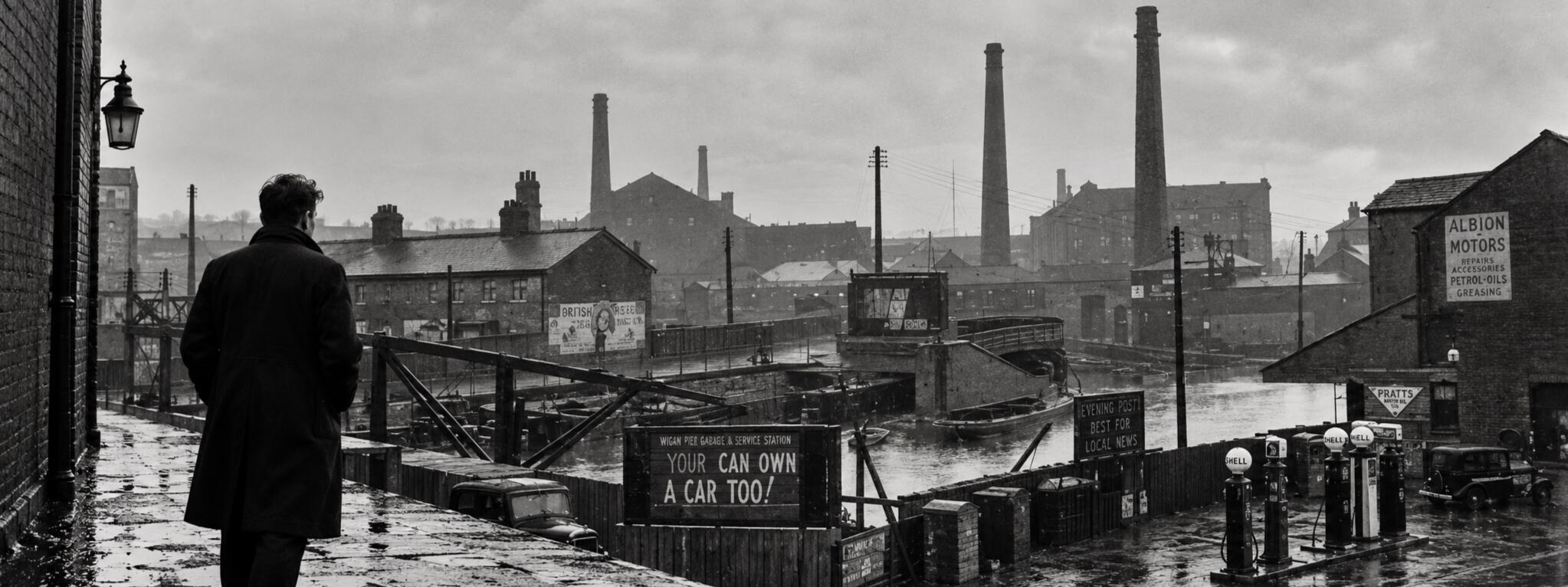
George Orwell came to Wigan in 1936 to investigate poverty and working life. He found dangerous work, hard conditions and a story worth telling. He also gave Wigan a literary reputation that outlasted the world he described.The poverty was real. So was the skill and courage of the miners whose lives he recorded. But somehow the bleakness became the whole story, and Wigan was left playing the nation’s favourite industrial misery.Then there’s the small matter of the pier. Orwell went looking for it. It wasn’t there. Why do men hate asking for directions?
That’s where we begin.
He found the library instead (probably by accident). Then he changed the subject.
Orwell researched The Road to Wigan Pier in Wigan’s Reference Library, now part of the Museum of Wigan Life. The first half reports on working life in the industrial north. The second turns into an argument about socialism and the English left.The title keeps pointing at Wigan. The argument doesn’t.The reporting still bites. But Wigan supplied the title, the miners supplied the evidence, and then Orwell spent a large part of the book fighting people who weren’t in Wigan at all. What a miserable bastard. The town didn’t just get a bad review; it got stuck on the cover of somebody else’s argument.
The bloke with the clipboard
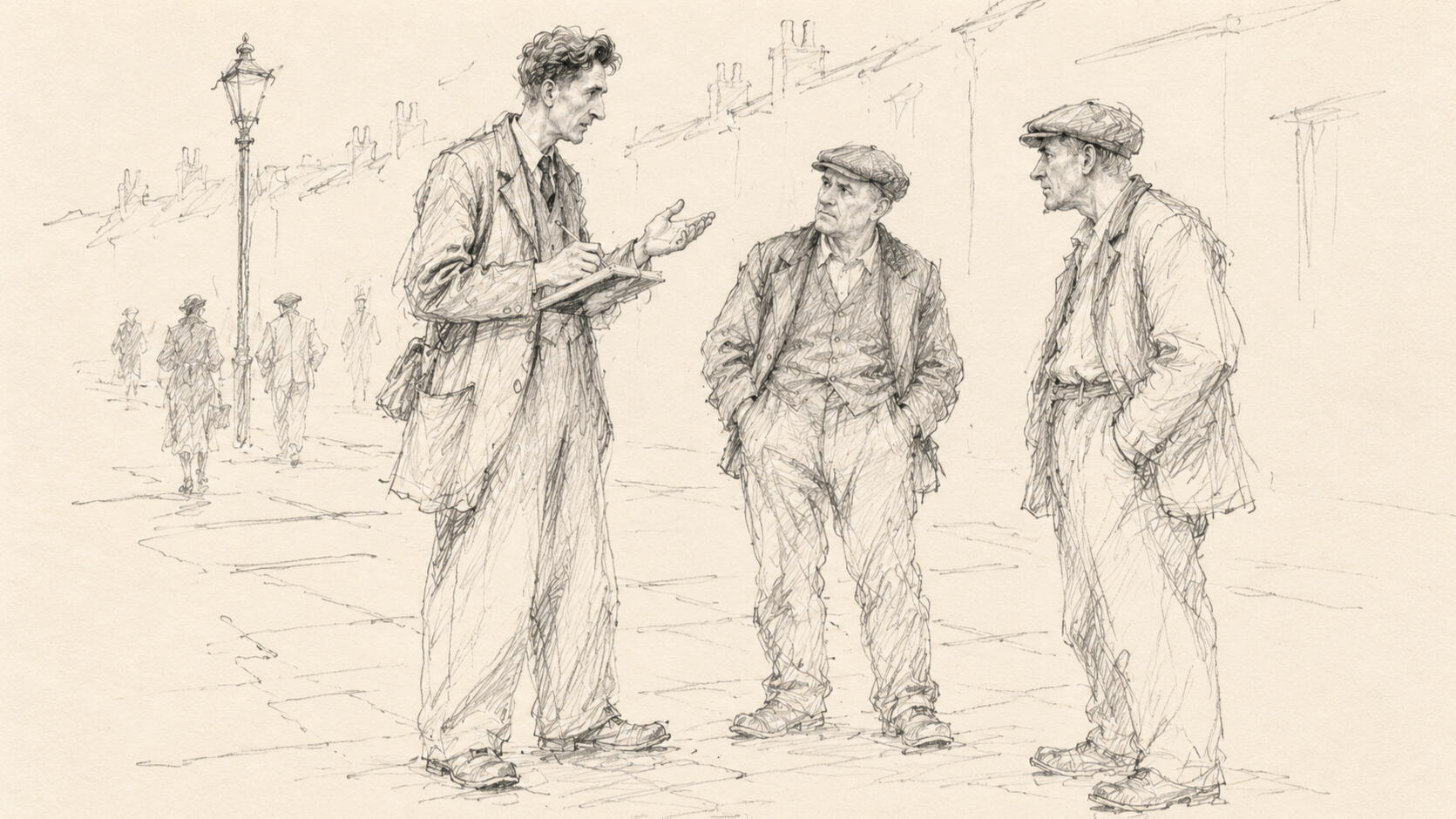
Orwell didn’t arrive in Wigan with a famous-author badge. He was a tall, scruffy stranger in Oxford bags, stopping people in the street, like a 1930's Chugger to ask where they worked and how much they earned.One local later remembered that he and his mates thought Orwell was a government snooper, checking up on them for the Means Test. They only realised he was a writer when The Road to Wigan Pier came out.You can't blame them for being suspicious, can you?If a stranger turns up asking what you earn, “literary investigation” probably isn’t your first guess.The questions were about working life. The fear was about what someone might do with the answers.
Orwell came to observe Wigan. Wigan had to decide whether to trust him and they don't even trust people from Hindley.
The boy George
Now, let's not be unfair on the gangly giant. I'm sure people found him easy to relate to.After all, weren't the majority of Ince residents born in India as their father worked as an official in the Opium Department of the Indian Civil Service?And people of Scholes, is it safe to assume you spent time in Henley-on-Thames before boarding at Eton College with people like Aldous Huxley and Ian Fleming?Actually, how many boys, say to the nearest 10, were called Aldous in your school?Finally, on leaving school, do you think it was a life down the mines or in a factory? Or serving in the Imperial Indian Police?Not my idea of an everyman...
At least he came with an open mind
Orwell said that he had been taught to see working-class people as dirty - good start, G.But Orwell's great weakness was that he treated Wigan primarily as a place to investigate poverty, rather than a community worth understanding in its own right.That distinction matters. His book was an investigation of industrial working-class life, not a portrait of Wigan. Yet the town has spent nearly 90 years living with the title. It makes you wonder if he would even recognise the place today.
While we're on the subject
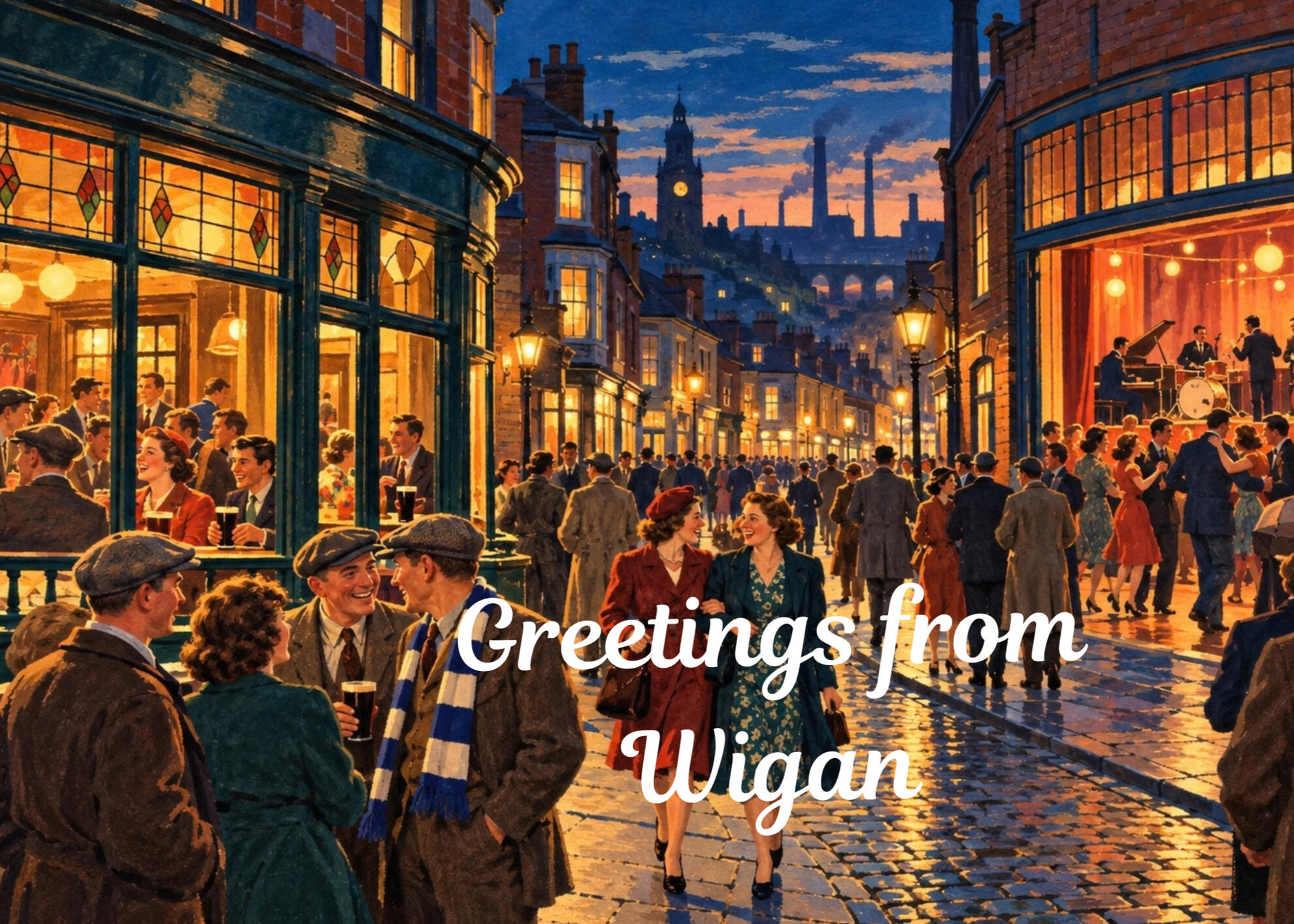
Orwell starts his book with a description of a filthy lodgings above a tripe shop.We know he had to leave his previous accommodation, but you can't help feeling this was a deliberate choice to choose somewhere that bad.He 'conveniently' forgets the well-off families, the professionals and the upwardly mobile. The picture he paints is one of a living hell for everyone - not true, Georgie.He was a humourless sod who missed the entertainment, music halls, pubs, sporting culture and local wit. Certainly no George Formby.He was only here for 3 weeks (in bloody February). I've had holidays longer than that.
So, what about the real Wigan?
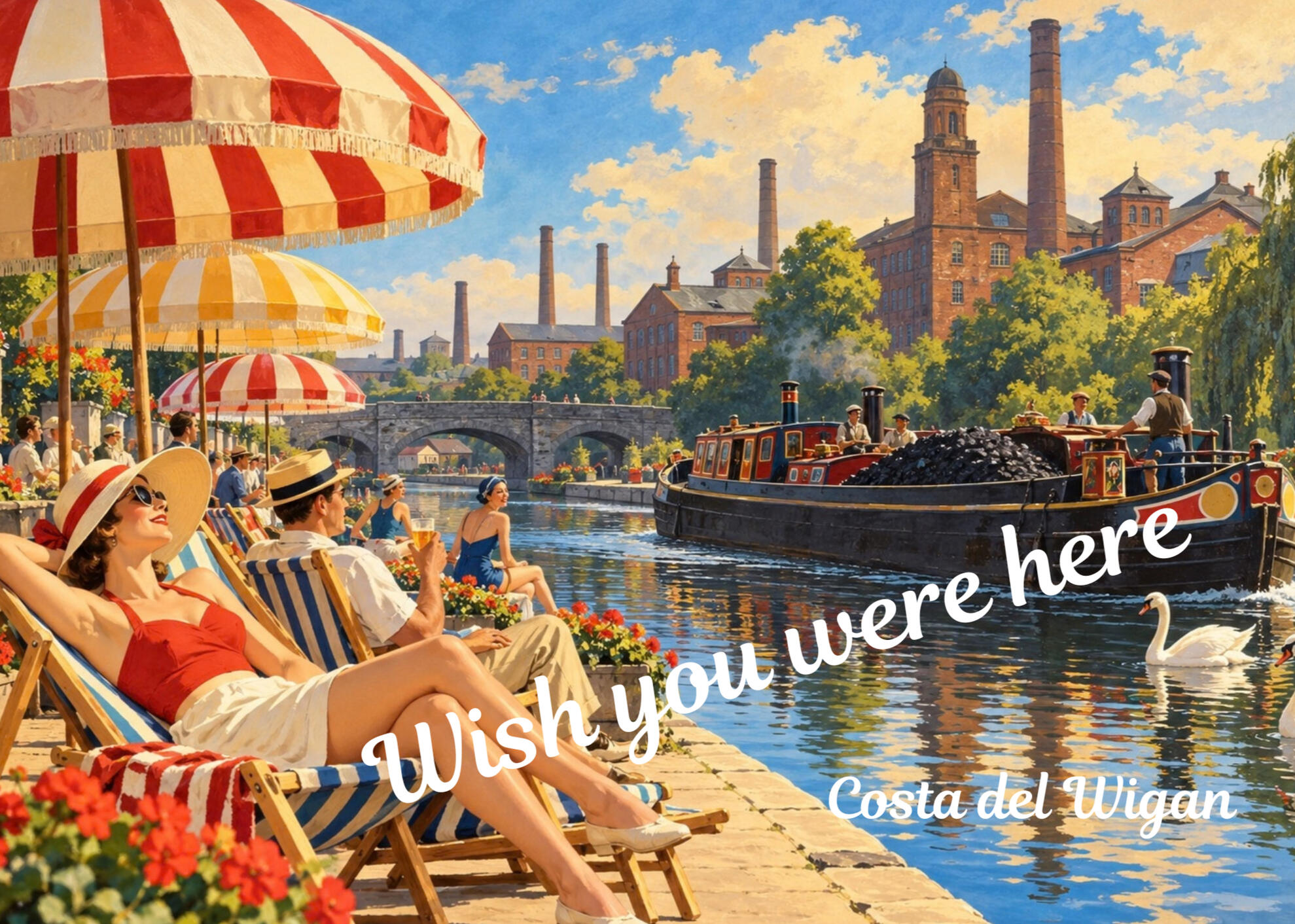
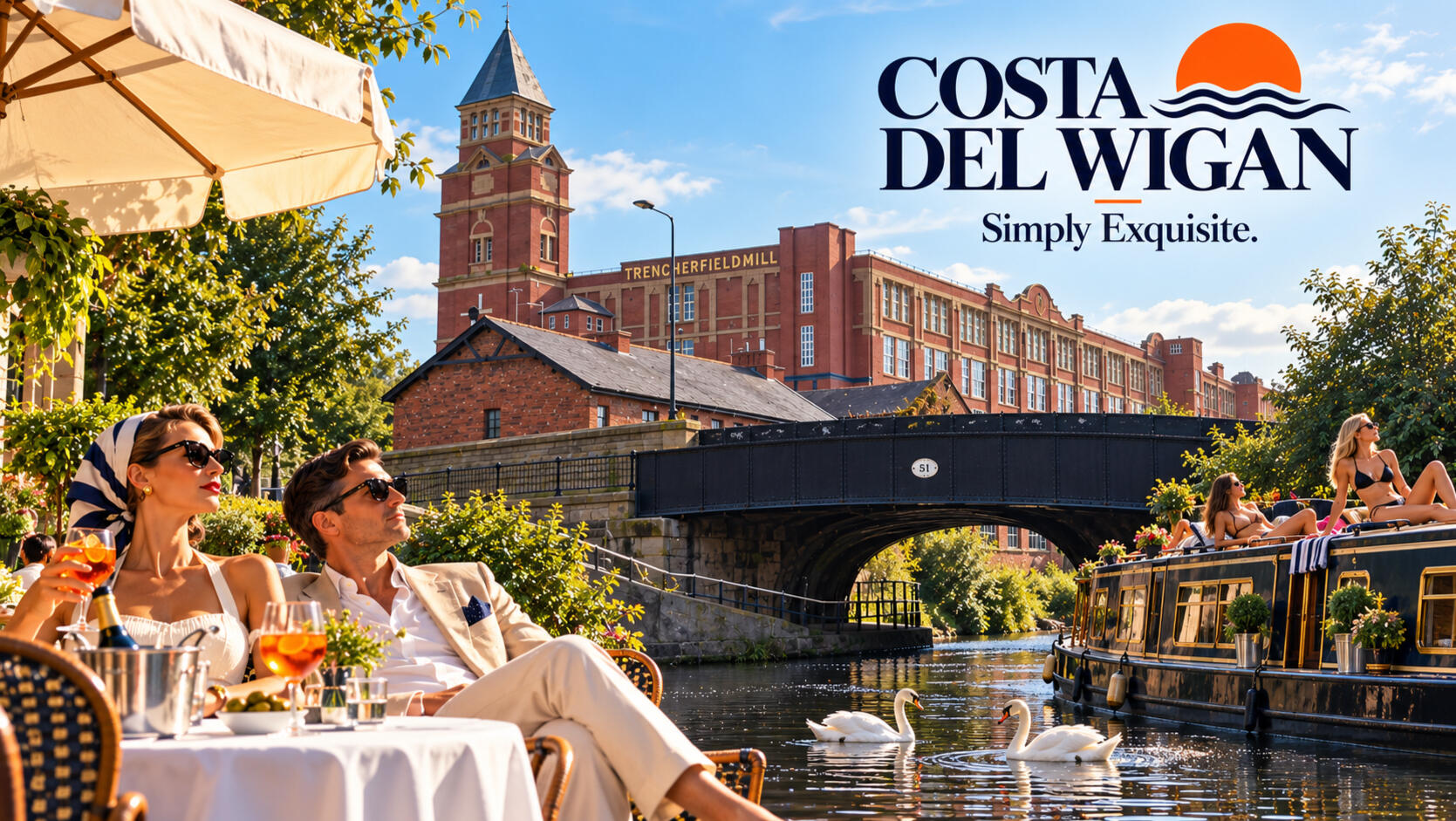
Wigan sits between Manchester and Liverpool, with the coast nearby and countryside close enough for an escape. An inconveniently good location for a town so often treated as a punchline.Come hungry: there are local favourites and food from further afield. Stay for the pubs, bars and Northern Soul. Walk beside the water, get lost in the parks, look up at the old buildings, find the arts and culture. You might even hear a joke about Liverpool before you’ve finished your drink. Fair enough, their sense of humour is nearly as good as ours. Nearly.Orwell found hardship. He didn’t find all of Wigan. The town we know is a million miles from the one he tarred us with.Costa del Wigan. Simply Exquisite.